Best Multimodal TMS for US Freight Forwarders in 2026
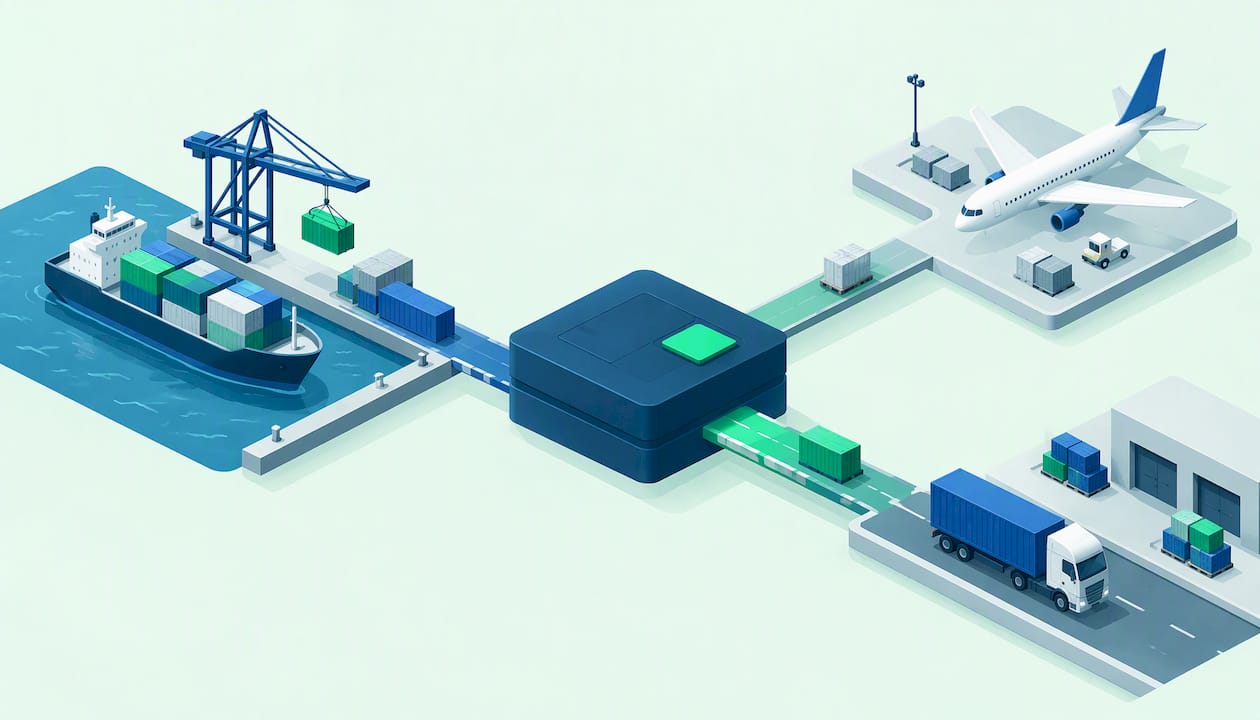
The best multimodal TMS for a US freight forwarder is the one that runs ocean, air, road and customs work in a single system, with rates, tracking, documents and accounting all in the same record. For forwarders who want that without a long implementation and without paying for add-ons, we built FreightSuite to be exactly that platform. For very large global operations, a deep legacy suite such as CargoWise may still be on your shortlist. This guide explains how to tell the difference and how to choose.
TL;DR
- A multimodal TMS plans, executes, tracks and bills shipments across more than one mode of transport in one platform, instead of stitching together a separate tool per mode.
- For forwarders, the decision comes down to scale, implementation time, how native the automation is, and whether finance and tracking sit inside the core product.
- Legacy suites offer depth, but implementation can be long: one 2026 buyer guide puts CargoWise rollouts at 6 to 24 months.
- FreightSuite is an agentic TMS built for forwarders, with rate management, air and ocean tracking, finances, workflows and AI agent orchestration included out of the box.
- Shortlist two or three systems, run your own real shipments through a demo, and judge each one on what your team stops doing by hand.
Table of Contents
- What a multimodal TMS actually is
- Why the ground is shifting for forwarders
- The criteria that separate good systems from the rest
- How the main options compare
- Match the platform to your scale
- Where FreightSuite fits
- A step-by-step way to run your evaluation
- Mistakes forwarders make when buying
- FAQ
- Sources
What a multimodal TMS actually is
A multimodal TMS is a transportation management system that handles shipments moving by more than one mode, typically ocean, air, road and sometimes rail, within a single platform. The value is not that it lists many modes on a feature page. The value is that a booking, a rate, a document set, a tracking feed and an invoice all belong to one shipment record, whichever mode carries the cargo.
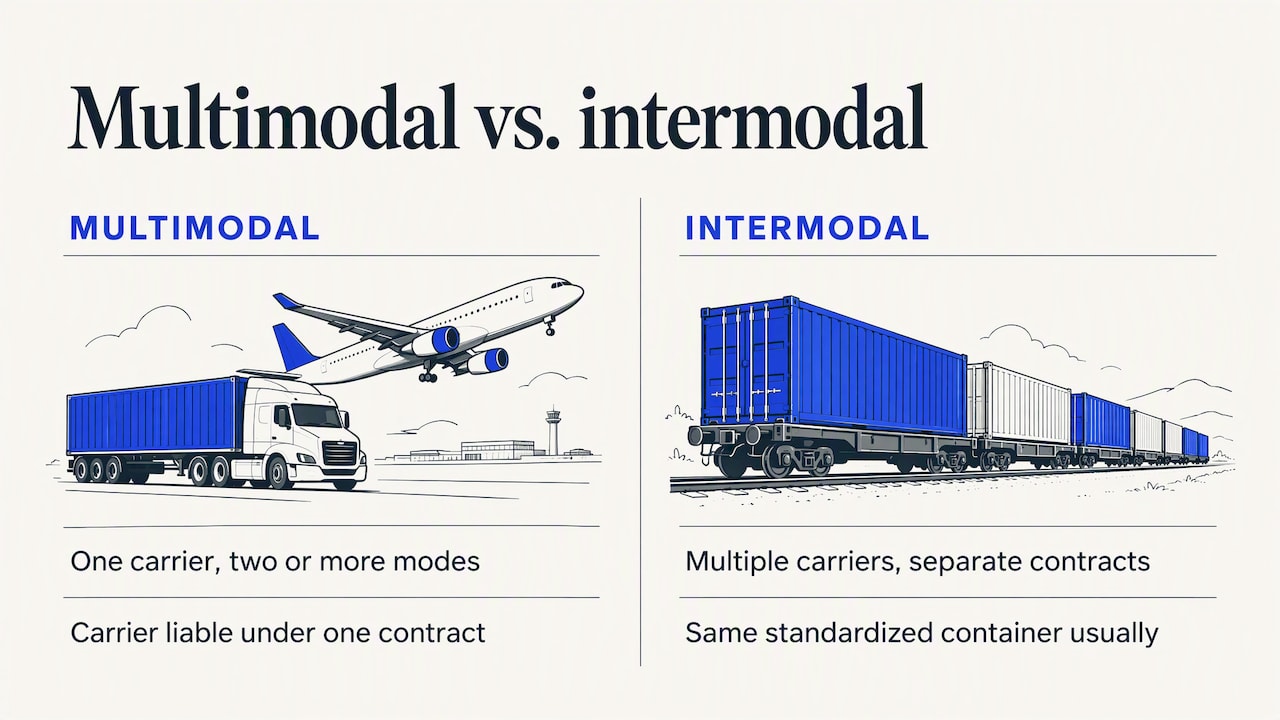
The vocabulary matters, because buyers and vendors use it loosely. In multimodal transportation, a single carrier uses at least two modes and is legally liable under the contract. Intermodal shipments, by contrast, involve multiple carriers, each with its own contract for its leg, and the cargo usually stays in the same standardized container throughout. A freight forwarder often sits in the middle of both patterns, arranging legs with different carriers while presenting one service to the customer.
That is why the software question is different for forwarders than for shippers or carriers. A shipper wants to tender loads and compare carriers. A carrier wants to dispatch its own assets and subcontracted capacity. A forwarder needs to quote across modes, book with many carriers, manage documents and customs, track in real time, and bill and settle costs with margin visibility. When we say multimodal TMS here, we mean the forwarder version of that definition.
Why the ground is shifting for forwarders
The forwarding industry has spent years running on systems designed before cloud software and before AI could read a document. Many teams still re-key bookings, chase carrier statuses by email and reconcile vendor invoices by hand. Headcount grows almost in line with volume, and margins stay thin.
The window is real, and it has a timeline. Forwarders that move their operations onto a platform with native automation can handle more shipments per person, shorten the gap between a cost being incurred and being invoiced, and give customers live visibility without extra staff. Those that wait will compete against firms that already operate that way. This is the strategic context for choosing a TMS: you are not buying a filing cabinet for shipments, you are choosing how much of your operation can run without people touching it.
The criteria that separate good systems from the rest
Feature lists look almost identical across vendors, so the useful comparison is about how each capability is delivered. These are the criteria we would put on a scorecard.
Mode coverage inside one record
Ask to see an ocean booking, an air booking and a road leg handled in the same workflow, then a customs filing attached to the same file. If the demo switches products or logins between modes, you are looking at a suite of modules, not one multimodal system. Dedicated capabilities matter too: ocean needs container and carrier schedule logic, air needs master and house airway bill handling, road needs dispatch and proof of delivery, and customs brokerage needs document and compliance workflows.
Rate management
Forwarders live and die on rates: carrier contracts, spot quotes, surcharges and validity dates across modes. A strong system stores rates by mode, lets sales quote from them quickly, and carries the cost through to the shipment so profit is visible per file. If rates live in spreadsheets outside the TMS, quoting stays slow and margin stays guesswork.
Tracking and integrations
Tracking is no longer a differentiator. One 2026 industry guide reports that roughly two thirds of providers now offer real-time GPS tracking, which is why it is described as table stakes. What separates platforms is how deeply tracking connects to the rest of the workflow: does an ocean delay update the customer dashboard, flag a demurrage risk and trigger a notification automatically? For a closer look at the air side, see our guide on how a TMS tracks air shipments, and for the wider picture our guide to real-time logistics tracking.
On connectivity, leading platforms commonly support REST and JSON APIs, EDI-style adaptors and partner layers such as INTTRA and Magaya Connect to automate carrier-side workflows. Ask every vendor which carriers and data sources are connected today, and which require a custom project.
Finance, accounting and credit control
A forwarder that tracks perfectly but invoices slowly still loses money. Look for cost and revenue captured per shipment, dynamic FX, invoice recognition for vendor bills, credit control, and a clean connection to your accounting software. One buyer guide estimates that automated billing and invoice reconciliation can cut manual billing discrepancies by roughly 18%, a useful reminder that finance automation is a margin topic, not just an admin one. If audit trails matter to your team, our piece on TMS accounting integration covers what to check.
Automation and AI
This is where the newest platforms diverge most from the legacy field. Bolt-on AI sits beside the TMS and needs people to copy results across. Native automation reads documents, applies workflows and coordinates tasks inside the system. Ask what happens to an inbound vendor invoice or a booking confirmation email from the moment it arrives to the moment it is posted. Count the human touches.
Implementation time and total cost
Implementation is where many legacy deployments stall. One 2026 comparison reports that CargoWise implementations typically take 6 to 24 months and that its pricing is transaction-based. Transaction-based pricing is not inherently bad, but it means your bill moves with volume and with which modules you switch on. Ask every vendor for a written implementation plan, the list of what is included in the base subscription, and what is sold separately.
How the main options compare
The table below compares the options a US forwarder is likely to meet on the criteria above. Where we describe a competitor, we limit ourselves to what published sources support. Pricing for most of these systems is quoted per customer, so confirm current figures directly with each vendor.
| Platform | Best suited to | Implementation and pricing signals | Where it shines |
|---|---|---|---|
| FreightSuite | Forwarders and logistics companies that want one cloud platform with native automation | No published price; demo-led. Core features are included without add-ons, by our design | Ocean, air, road and customs in one record, rate management, finance, workflows and AI agent orchestration built in |
| CargoWise | Very high-volume global forwarders needing maximum depth | 6 to 24 months typical implementation; transaction-based pricing, per the 2026 comparison cited above | Breadth and scalability for large multinational operations |
| GoFreight | Forwarders focused on ocean, air and rail connectivity | Pricing not covered here; confirm with the vendor | Presented as natively integrated with over 125 ocean, air and rail carriers and 45 US terminals |
| Magaya | Forwarders and warehouse-centric operators | Pricing not covered here; confirm with the vendor | Partner connectivity layer, Magaya Connect, cited among common integration routes |
| Descartes | Teams that need a broad logistics and customs software portfolio | Pricing not covered here; confirm with the vendor | Established portfolio across logistics and compliance |
No table can settle the decision, because the right answer depends on your size and the shape of your freight. That is the point of the next section.
Match the platform to your scale
The same 2026 comparison makes a point we see in practice: single-entity US firms often over-buy enterprise platforms, while high-volume global groups may genuinely need the depth and scalability of CargoWise. Buying more system than you can staff, configure and maintain is its own kind of cost. The reverse also holds: a platform built for a single office can strain when you add countries, entities and currencies.
Operational complexity matters as much as headcount. A forwarder with a warehouse, consolidation services and last-mile coordination faces different workflow demands than a pure ocean NVOCC. If your operation includes handling choices such as cross-docking versus transloading, make sure the TMS can represent those handling steps on the shipment file and cost them properly, rather than leaving them in side spreadsheets.
A practical way to place yourself: list the modes you sell, the number of entities and currencies you operate, the number of staff who touch a typical shipment, and how many systems a shipment passes through today. If that last number is more than three, consolidation will likely pay for itself regardless of which vendor you choose.
Where FreightSuite fits
We built FreightSuite as an agentic TMS: an alternative to legacy systems such as CargoWise, Magaya, Descartes, Multifreight, Logi-Sys and Logitude, with automation and AI agent orchestration native to the product instead of attached afterwards. Our approach is that the core features arrive together out of the box, so you are not negotiating a stack of add-ons to get tracking, finance and workflows working in the same place.
In practice, that means a forwarder can manage rates, shipments, documents and invoices in one cloud platform, with air and ocean tracking feeding the same record. Our mode-specific capabilities are described on our pages for ocean freight TMS and automation, air freight management, road freight transport management and customs brokerage TMS software. Finance features include automated document management, invoice recognition, dynamic FX and cost tracking, credit control and connections to accounting software. Customers get dashboards for visibility, and your team gets workflows it can customize.
Our goal is that your forwarders run faster, remove administrative work and improve profitability. We do not publish a price, because the right configuration depends on your volumes and modes. The most useful next step is a demo built around your own shipments. If you are comparing us with CargoWise specifically, our CargoWise comparison page lays out the differences, and our general comparison page covers the wider field. You can start from the FreightSuite homepage to request a walkthrough.
A step-by-step way to run your evaluation
Start with three real shipments, not the vendor’s sample data: one ocean full container load with a customs entry, one air shipment with a house and master airway bill, and one road leg with a delivery proof. Ask every shortlisted vendor to run those through, live, from quote to invoice.
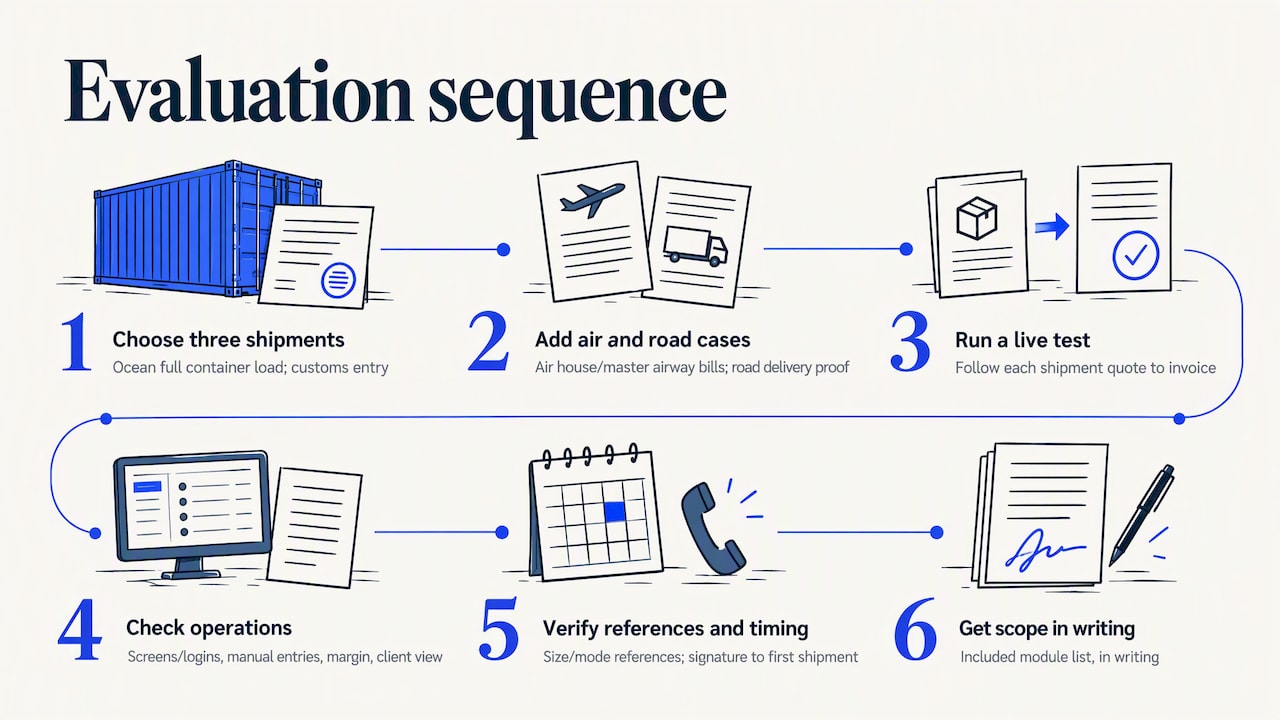
Then watch for four things. Count the number of screens and logins. Count the manual entries a person makes. Check whether the cost and revenue appear on the shipment as it moves, so you can see margin before the invoice goes out. And check what the customer sees without calling you.
Next, ask for references from forwarders of your size and mode mix, and ask how long their go-live took from signature to the first live shipment. Treat any answer that depends on a long consulting engagement as a cost, even when it is not on the quote. Finally, ask for the included module list in writing. Our general guidance on selecting a system is in our freight forwarding TMS explainer, and our roundup of cloud TMS platforms for US forwarders goes further on the cloud side.
The choice is yours to make, and it is worth making deliberately. A TMS decision sets the operating model of your company for the next five to ten years, so the evaluation should test how your people will work, not how a feature list reads.
Mistakes forwarders make when buying
The most common mistake is buying for the largest imaginable future instead of the next three years. The second is treating tracking as the main event when finance and workflow automation drive most of the margin gain. The third is underestimating change management: whichever system you choose, your team needs a clear owner, a migration plan for rates and customer data, and a realistic cut-over date. The fourth is accepting a vague answer on what is included. If a capability matters to you, it should appear in the contract.
FAQ
What is the difference between a multimodal TMS and an intermodal TMS?
The terms describe how freight moves. In multimodal transportation, one carrier uses at least two modes under a single contract and carries the legal liability. Intermodal shipments involve several carriers and contracts, usually with the cargo staying in the same container. A forwarder-focused multimodal TMS should handle both patterns, since you often arrange legs with different carriers.
Is a multimodal TMS the same for shippers and forwarders?
No. Shipper systems focus on tendering loads, comparing carriers and auditing freight spend. Forwarder systems also handle quoting, house and master documents, customs, cost and revenue per file, and customer billing. If you sell freight services to others, choose a system designed for forwarders.
How long does it take to implement a multimodal TMS?
It varies widely by vendor and scope. One 2026 comparison reports 6 to 24 months for CargoWise. For any vendor, ask for a written plan with milestones, who does the data migration, and the date of the first live shipment.
Does FreightSuite publish its pricing?
No, we do not publish a price. FreightSuite is sold as a subscription after a demo or trial, and the configuration depends on your modes and volumes. Our core features are included out of the box rather than sold as add-ons.

