Agents in the foundations. Not bolted on.
Most things you can ask a person to do in FreightSuite, an agent can now do. This is how the system is built to make that true.
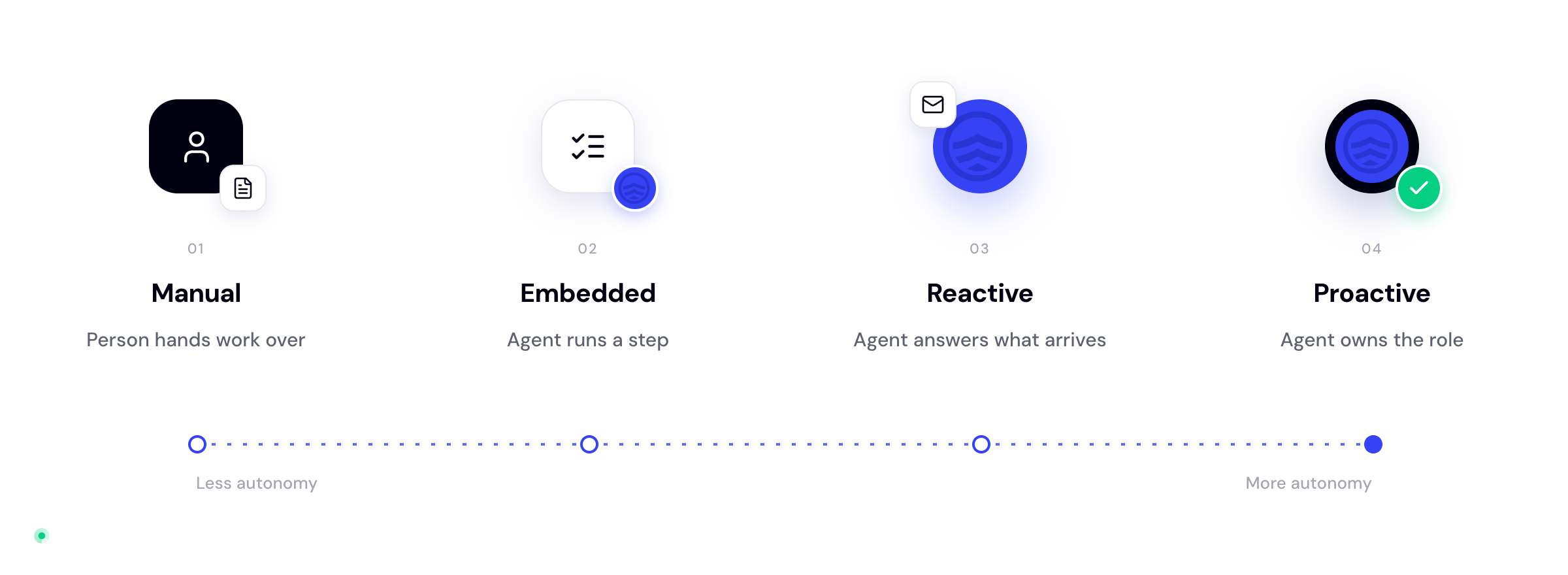
Four kinds of AI. One system.
From an operative asking for help, to an agent that works a whole job on its own.
Manual AI
You tell it what to do.
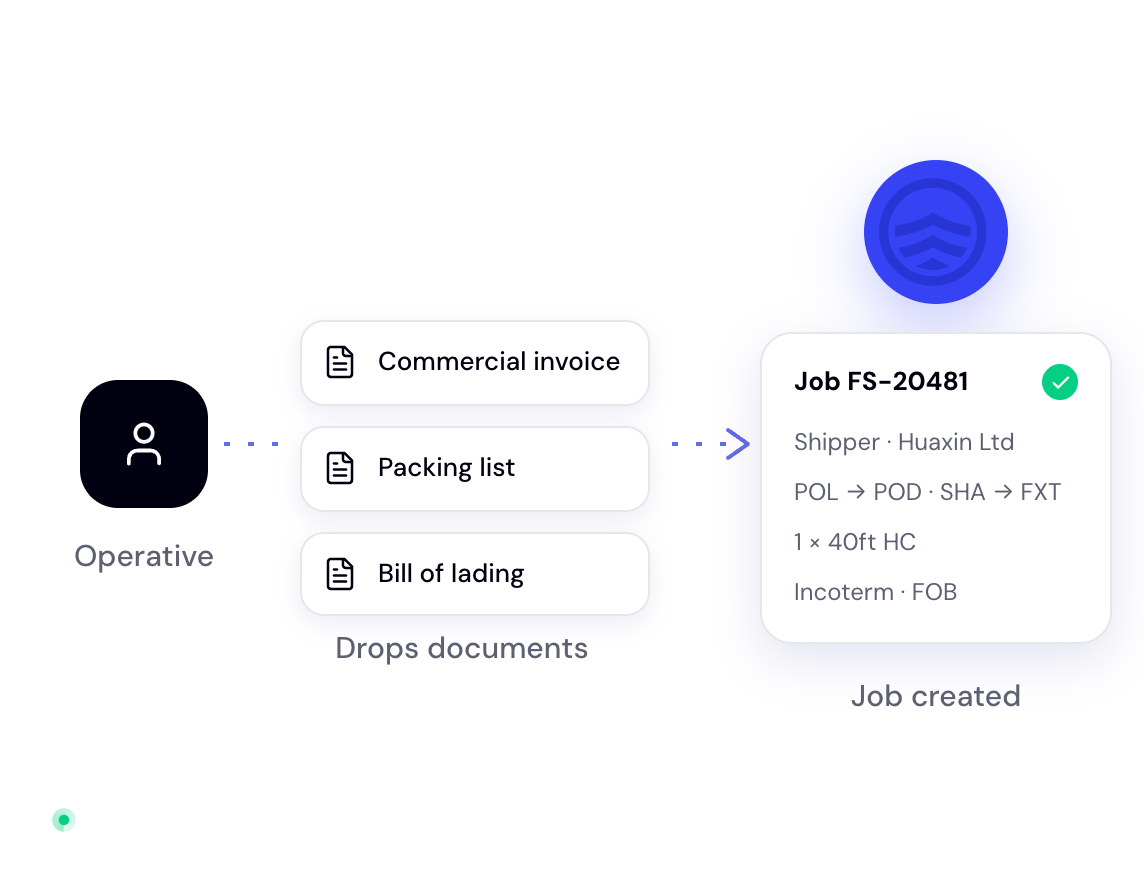
Drop in a CMR, a CIPL and a house bill and say: extract everything and create the job. The operative is in control; the AI does the work.
Embedded AI
It runs in the background. Nobody asks.
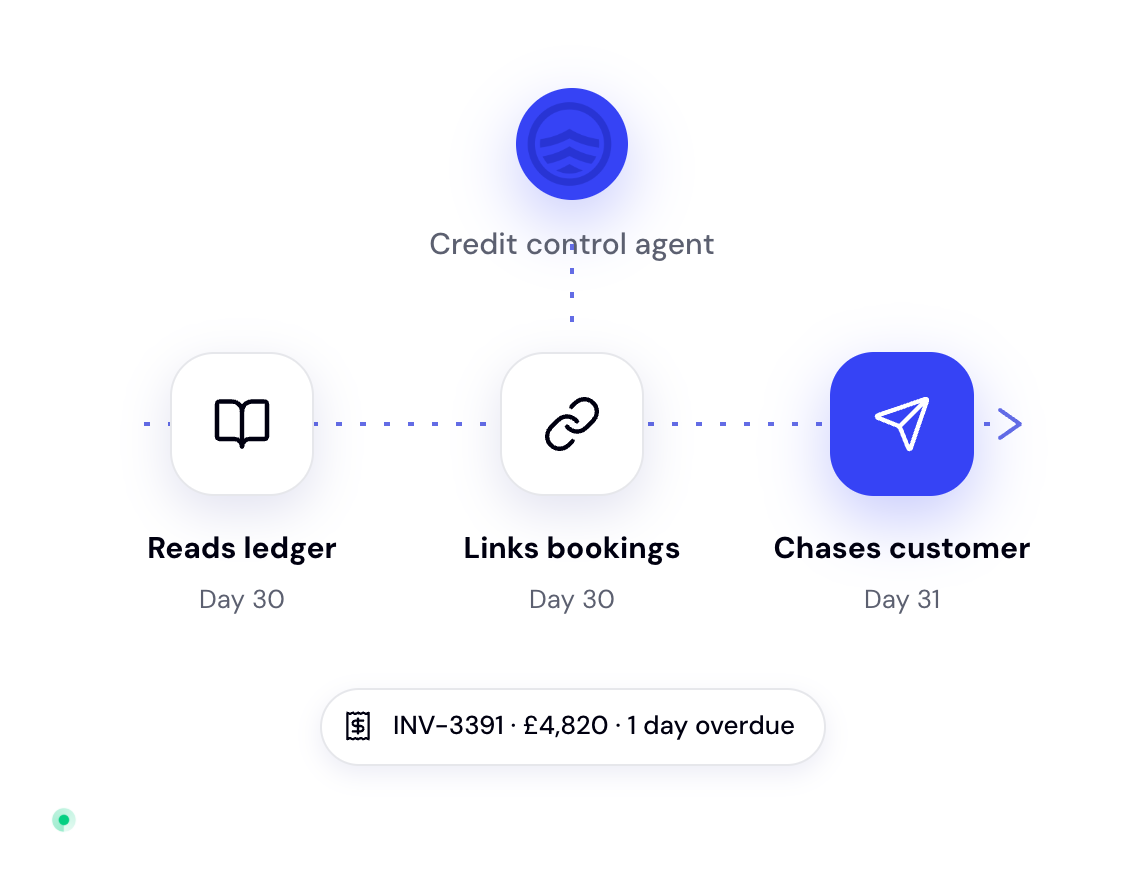
The credit control agent checks what's outstanding, links it to bookings and chases the customer, on a schedule, without prompting. Document association and extraction work the same way.
Reactive AI
Something arrives. It responds.
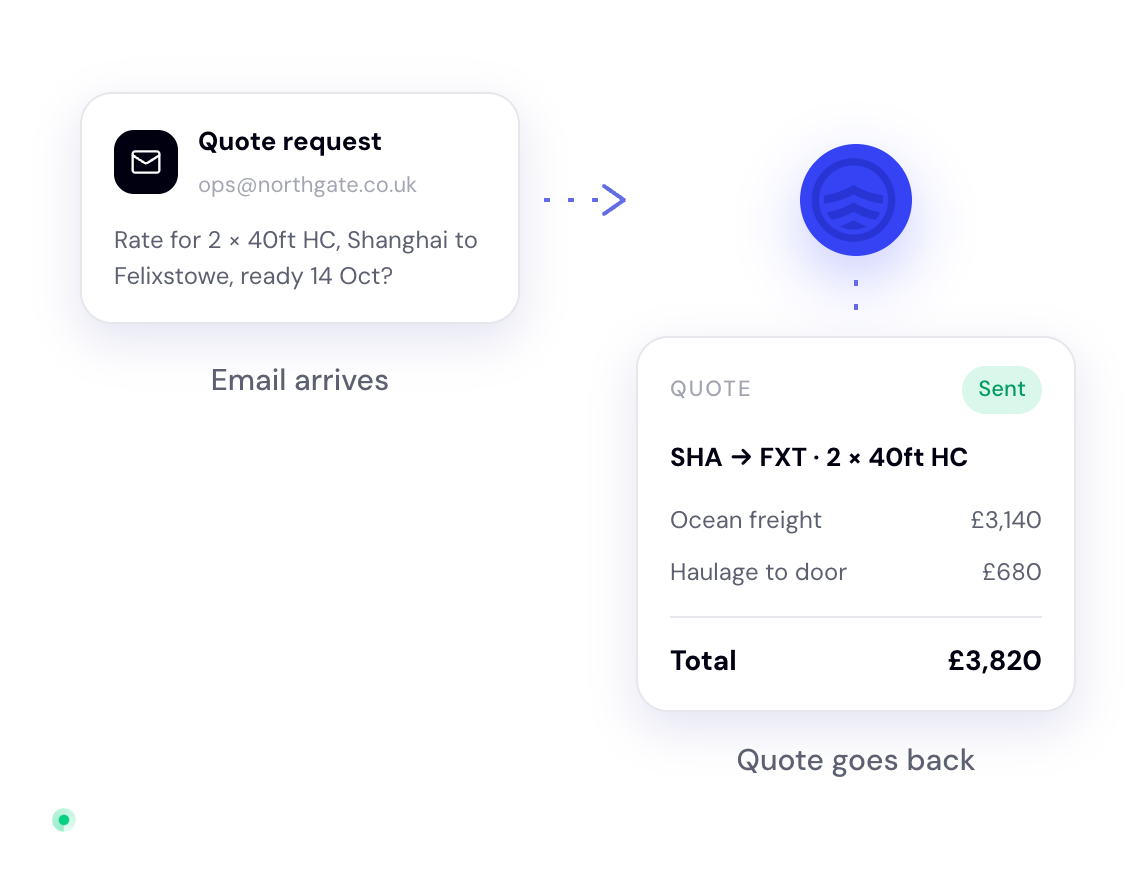
An email lands with a customer's new VAT number: the system asks whether to update the record. A quote request comes in: the agent builds the quotation. Triggered by email, by API, by any event you choose.
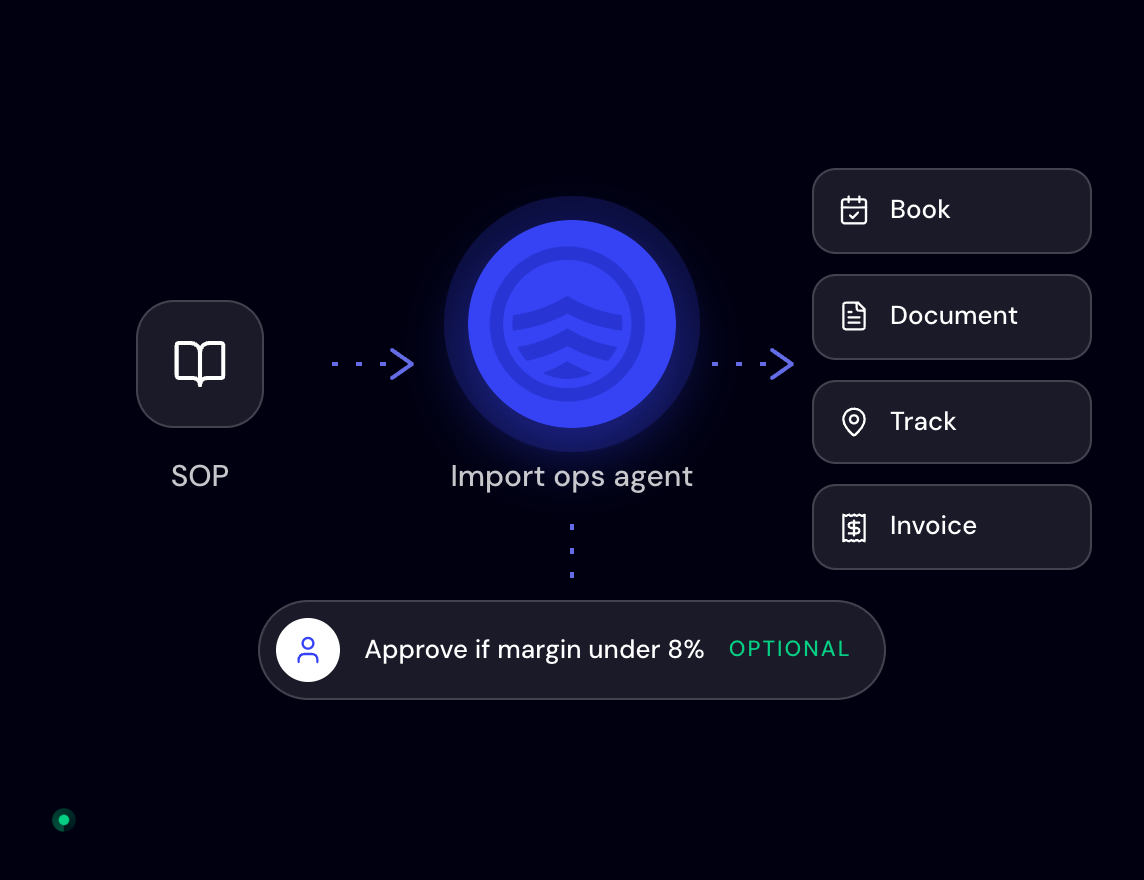
Proactive AI: super agents
No trigger. It works like an employee would.
You build the agent, give it a detailed SOP, and it does the operational and financial work of a role — fully autonomously, with human checks wherever you want them. It's as good as you instruct it to be.
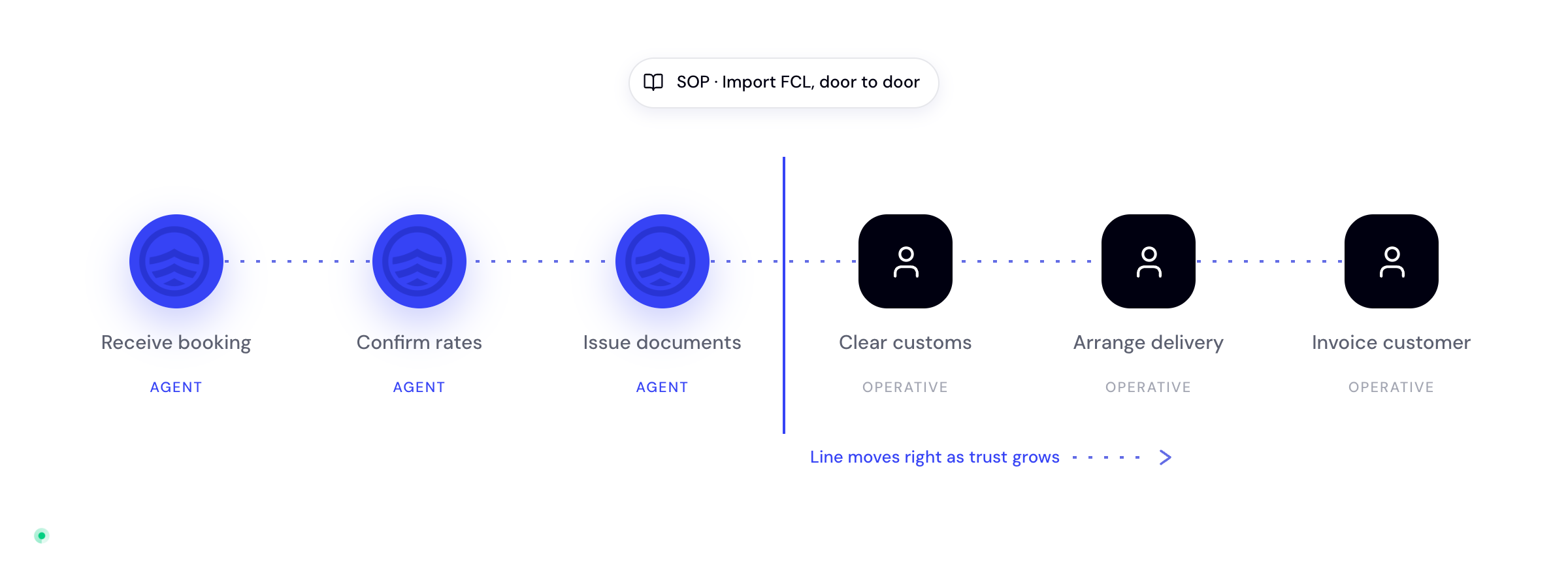
Operatives and agents work from the same SOP
One workflow, written once in as much detail as you like. Each step is assigned to an operative or an agent. Move the line whenever you're ready.
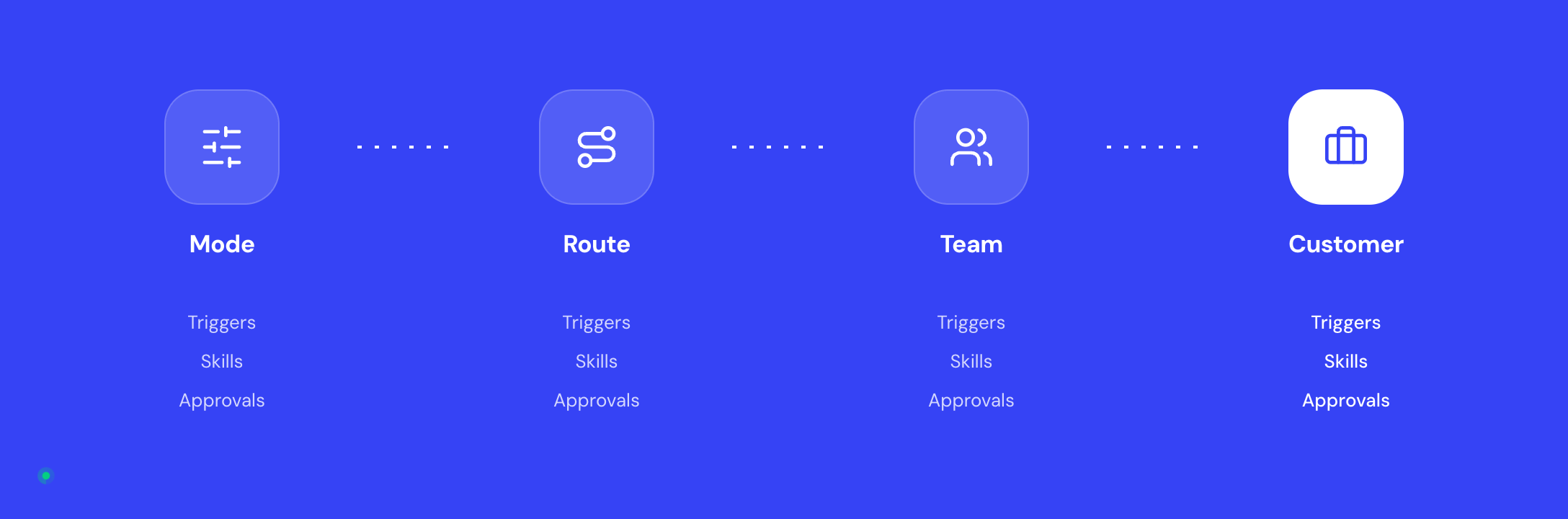
Configurable down to the mode, route, team and customer
Triggers, skills, approvals and SOPs are all yours to set. It's as good as you instruct it to be.
Scope
Different behaviour for ocean and air, for one lane and another, for one team and one customer.
Skills
Each agent carries the specific, advanced skills you give it, tuned to how you operate.
Control
Fully autonomous, or a human check on any step. You decide, per workflow.
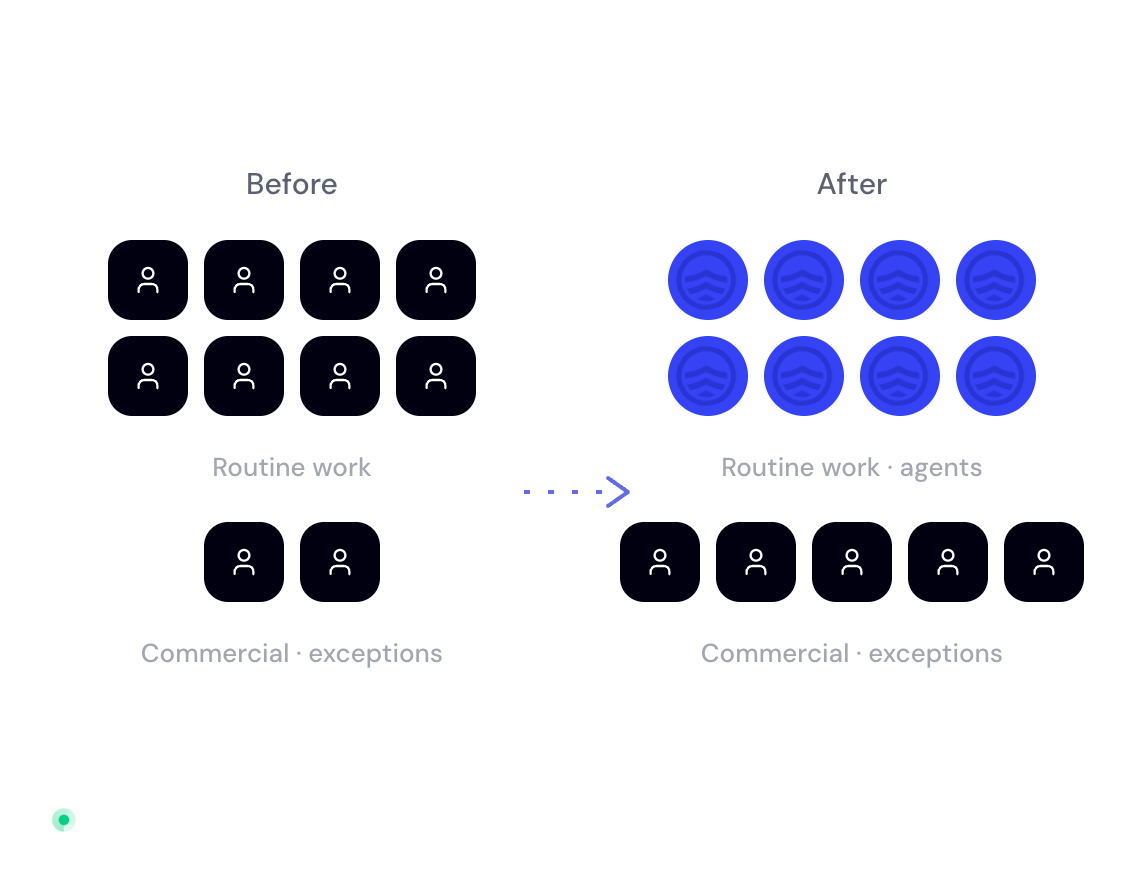
This releases the potential of a forwarder
When agents carry the routine work, the people who were cost centres become profit centres: moved into exceptions management and commercial roles where judgement earns money. You orchestrate a fleet of agents, and your team works only on the value-adds.
Build your first super agent with us
Bring a role and its SOP. We'll show you how much of it an agent can run by the end of the call.