Ops Teams: Turn Air Cargo Milestones into TMS KPIs
Air cargo milestones are the standardized checkpoints defined by Cargo iQ’s Master Operating Plan (MOP), the industry benchmark for tracking a shipment from shipper to consignee. The MOP lays out 19 milestones, from booking through final delivery, using codes like FOH, RCS, DEP, and ARR. Freight forwarders use these events to measure on-time performance and catch problems before they become claims.
TL;DR:
- Only the relevant milestones based on the shipment’s routemap, either airport-to-airport or door-to-door, should be tracked to avoid false missing alerts.
- Warehouse milestones FIW and FOW are crucial for identifying delays within terminal operations, especially for complex D2D shipments involving multiple handling points.
- The three key KPIs are RCS to DEP delta, on-time RCS percentage, and FIW to FOW handover time, each indicating specific operational bottlenecks.
- Accurate milestone data requires proper mapping, validation, and routemap governance, with regular audits to prevent common errors like inconsistent UPID tracking and delayed warehouse reports.
- Demand growth exceeds capacity, making milestone performance and exception management increasingly vital for early bottleneck detection and operational efficiency.
Table of Contents
- What Is Cargo iQ, and What Does the MOP Actually Define?
- The Key Milestones Every Shipment Passes Through
- Turning Milestone Timestamps Into KPIs and Exception Triggers
- Building Milestone Tracking Into Your TMS
- Where Milestone Tracking Breaks Down (and How to Fix It)
- Where to Verify the Official Milestone Definitions
- Ready to Turn Milestone Data Into a Real Operations Advantage?
- Sources
- FAQ
What Is Cargo iQ, and What Does the MOP Actually Define?
Cargo iQ is the industry group, backed by IATA, tasked with standardizing how air cargo shipments get planned, tracked, and measured. Before Cargo iQ, every carrier and forwarder had its own version of “on time,” which made benchmarking across partners nearly impossible. The MOP fixed that by giving the industry one shared vocabulary for shipment events.
The MOP is built around routemaps, not a fixed checklist. Two routemap types govern how milestones apply to a given shipment:
- A2A (Airport to Airport): covers the flight leg only, from acceptance at origin airport to arrival at destination airport.
- D2D (Door to Door): covers the full journey, including pickup and final delivery beyond the airport.
A shipment moving under a D2D routemap triggers milestones a straight A2A move never touches, which is why two forwarders can both be “MOP compliant” while tracking different sets of events.
Cargo iQ members do not just adopt the standard, they feed it. The group aggregates member data into industry benchmarking reports that let a carrier or forwarder see how its RCS to DEP time compares against the rest of the market, station by station. That benchmarking data also feeds Cargo iQ’s audit and certification process, so the MOP is not a static document sitting on a shelf. It gets revised as the industry finds gaps, which is exactly how newer milestones like FIW and FOW came into existence.
The Key Milestones Every Shipment Passes Through
The MOP groups its 19 milestones by where they happen in the shipment’s life cycle: origin handling, carrier transport, hub or warehouse handling, destination arrival, and final delivery. Not every shipment touches every milestone. A straight airport-to-airport move skips the pickup and delivery events entirely, while a full door-to-door shipment triggers nearly the whole sequence.
The MOP defines 19 standard milestones, and Cargo iQ’s own specification is explicit that which ones apply depends entirely on the shipment’s assigned routemap, not a universal template.
Here is what the core codes mean operationally:
- RCS (Received from Shipper): the carrier has physically accepted the shipment at origin. RCS is the baseline most on-time KPIs measure against.
- DEP (Departed): the flight carrying the shipment has left the origin station. The RCS to DEP window tells you how efficiently the carrier is turning cargo around.
- ARR (Arrived): the flight has landed at the destination station.
- NFD (Notification for Delivery): the consignee or broker has been notified the shipment is ready for pickup or delivery.
- DLV (Delivered): the shipment has reached the consignee. This closes the loop.
- FIW (Freight Into Warehouse): cargo has moved from the ramp into the terminal warehouse at a handling point.
- FOW (Freight Out of Warehouse): cargo has left the warehouse, headed either to the next flight or to final delivery.
- TOA (Trucking Order Available): road transport has been arranged for a leg of the journey, relevant on D2D routemaps with a trucking component.
- UPID (Unique Piece Identifier): not a milestone itself, but the reference tag that lets a TMS track individual pieces through every milestone above, especially critical when a shipment splits across multiple flights.
You will also encounter secondary codes like REH (Ready for Handling), PUP (Picked Up), and DEW (Documents with Warehouse), which cover pickup and paperwork events on more complex D2D routemaps. These matter less for a simple airport-to-airport booking, but they are exactly the events that catch delays on multi-leg or trucked shipments.
The FIW and FOW pair deserves special attention because of how recently it entered the standard. Cargo iQ’s process redesign added these milestones specifically to isolate warehouse and ramp handling performance, which used to be invisible between a flight’s arrival and the shipment showing up for delivery. Cathay Pacific was among the first carriers to pioneer the pair, and the logic behind it applies to any forwarder: without FIW and FOW, you cannot tell whether a delay happened on the ramp or inside the warehouse, so you end up blaming the carrier for a problem that was actually a terminal handling issue.
Turning Milestone Timestamps Into KPIs and Exception Triggers
A milestone timestamp is only useful once you compare it against a plan. The A2A or D2D routemap gives you the planned time for each milestone; the actual event feed gives you the real time. The gap between the two is your entire KPI system.
Three KPIs cover most of what operations teams need day to day:
- On-time percentage at RCS. What share of shipments had an actual RCS time within the routemap’s planned window? A drop here usually points to a shipper or pickup issue, not a carrier problem.
- Average RCS to DEP delta. How long does cargo sit between carrier acceptance and departure? A widening delta across a station signals ramp congestion or capacity constraints at that airport, something IATA’s market data suggests is becoming more common as cargo tonne kilometers rose 8.5% year over year against 4.4% capacity growth in mid-2026.
- FIW to FOW handover time. How long does a shipment sit in the warehouse between arrival and outbound movement? This is the number that tells you whether your terminal partner, not the airline, is the bottleneck.
Sequencing matters as much as the individual numbers. If DEP is on time but ARR is late, the delay sits with the carrier’s flight operations. If ARR is on time but FOW lags, the delay sits with ground handling. That distinction changes who you call first, and it changes which partner’s service level agreement gets flagged in a quarterly review.
Pro Tip: *Build your exception dashboard around deltas, not raw timestamps.
Most forwarders review these dashboards daily for active shipments and weekly for station-level trend reporting. Daily reviews catch the shipment that is about to miss a delivery window; weekly reviews catch the carrier or handling partner whose performance is quietly sliding.
Building Milestone Tracking Into Your TMS
Getting milestone data into a usable state starts with the inputs. A functioning setup needs carrier status messages tied to the A2A routemap, warehouse and terminal event feeds, and piece-level data tagged with a UPID so a split shipment does not lose visibility when it travels across two flights.
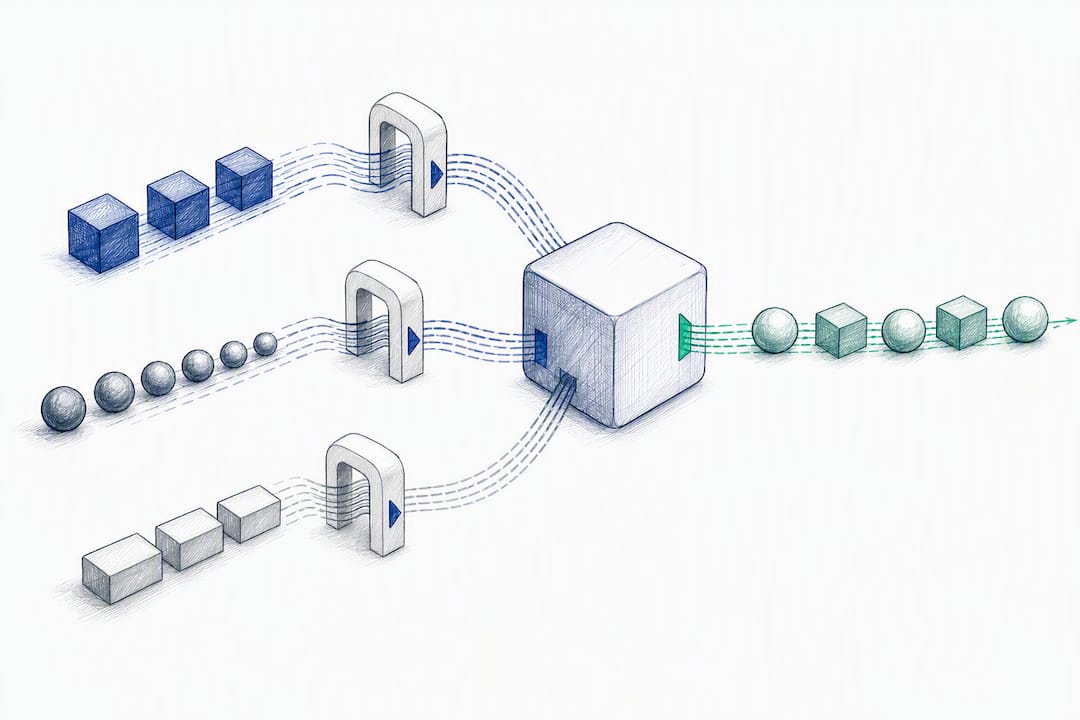
The harder part is mapping. Every carrier and every warehouse system labels events slightly differently, so your TMS needs a mapping matrix that translates a carrier’s raw status code into the correct MOP milestone, and applies conditional logic based on that shipment’s specific routemap. A shipment on an A2A routemap should never generate an expectation for a DLV milestone; a D2D shipment should generate one automatically. FreightSuite’s air freight tracking guide walks through exactly this kind of event ingestion and mapping logic, which is a useful reference if you are building or auditing your own process.
Once the mapping is in place, the operational payoff comes from three connected workflows:
- Automated alerts that fire the moment an actual timestamp misses its planned window by a defined threshold.
- SLA dashboards that roll milestone performance up by carrier, station, and partner.
- Root cause tagging that records why an exception happened, so the same failure pattern gets flagged faster next time.
Before trusting any of this in production, run a validation pass. Pick a sample of shipments across your most common routemaps, reconcile piece counts against UPID tags, and confirm timestamps are normalized to a single time zone standard across every data source feeding the system. A milestone tracking a system that mishandles time zones will report false delays every single day, and nobody will trust the dashboard after the third false alarm.
| Implementation area | What to check | Why it matters |
|---|---|---|
| Data inputs | Carrier feeds, warehouse events, UPID tagging | Missing inputs create blind spots between milestones |
| Mapping logic | Routemap-based conditional milestone assignment | Prevents false exceptions on shipments that skip certain milestones |
| Validation | Sample shipment audits, piece reconciliation, time zone normalization | Catches data quality issues before they reach a live dashboard |
Where Milestone Tracking Breaks Down (and How to Fix It)
The most common mistake is assuming all 19 MOP milestones apply to every shipment. They do not. Teams that build dashboards on that false assumption end up flagging “missing” milestones that were never supposed to happen on that routemap, which trains operations staff to ignore alerts altogether within a few weeks.
Other frequent problems include:
- Batched warehouse messages that report FIW and FOW hours after the actual event, making handover times look worse than reality.
- Inconsistent UPID mapping when a shipment splits across multiple flights or trucking legs.
- Piece counts that do not reconcile between the house waybill and the actual physical scan at the warehouse.
Edge cases add another layer. Road feeder service legs, transshipments through a third station, and partial piece reporting all require you to decide in advance how milestones apply, rather than improvising when the exception hits your dashboard.
Pro Tip: Treat routemap assignment as a governance function, not a one-time setup task. Review routemap accuracy quarterly, run sample audits against actual shipment paths, and put minimum data quality standards into your ground handling partner SLAs. Most milestone data problems trace back to a routemap that was never updated after a service change.
Where to Verify the Official Milestone Definitions
The Cargo iQ program page hosted by IATA is the starting point for membership, certification, and general standard information. The MOP specification PDF is the definitive source for every milestone definition, routemap rule, and KPI baselining method described above. Cargo iQ’s process redesign notes cover why and how newer milestones like FIW and FOW entered the standard. For broader industry context on demand and capacity, IATA’s June 2026 market analysis shows why tighter capacity is raising the stakes on milestone-based monitoring across the board.
Ready to Turn Milestone Data Into a Real Operations Advantage?
Reading the MOP is one thing. Running it inside a live operation, across dozens of carriers and hundreds of shipments a week, is another problem entirely. That is the gap FreightSuite was built to close. A transport management system designed to integrate air and ocean tracking, rate management, and workflow automation natively, without relying on add-on modules.
If milestone tracking, exception alerts, and carrier performance benchmarking are the operational muscle you are trying to build, the Air Freight Management System page walks through how FreightSuite handles shipment tracking end to end. For forwarders running multimodal operations, the broader FreightSuite platform connects air freight milestone data with ocean, road, and customs workflows in one system rather than three disconnected tools.
FAQ
What Are Air Cargo Milestones, Exactly?
Air cargo milestones are the standardized checkpoints in a shipment’s journey, defined by Cargo iQ’s Master Operating Plan, covering events from booking through final delivery. The MOP defines 19 such milestones, though only those relevant to a shipment’s specific routemap actually apply.
What Are the Two Main Types of Air Cargo Routemaps?
The two routemap types are A2A (Airport to Airport), covering only the flight leg, and D2D (Door to Door), covering the full journey including pickup and final delivery. Which routemap applies determines which milestones a shipment is expected to trigger.
What Is the Outlook for Air Cargo Demand?
Demand has been running ahead of capacity growth, with cargo tonne kilometers up 8.5% year over year against capacity growth of 4.4% as of IATA’s June 2026 market analysis. That gap tends to increase congestion at busy stations, which raises the value of milestone-level KPIs like RCS to DEP delta for spotting bottlenecks early.
What Do FIW and FOW Mean, and Why Were They Added?
FIW (Freight Into Warehouse) marks cargo entering the terminal warehouse, while FOW (Freight Out of Warehouse) marks it leaving. Cargo iQ added both through a process redesign to isolate warehouse handover performance, which previously stayed invisible between a flight’s arrival and the shipment reaching delivery.
Do All Air Cargo Shipments Trigger All 19 MOP Milestones?
No. Which milestones apply depends on the shipment’s assigned A2A or D2D routemap, and treating all 19 as mandatory for every shipment is one of the most common data quality mistakes in milestone tracking. A straight airport-to-airport shipment, for example, never generates a delivery milestone because that event falls outside its routemap.

