Protect Margin: Prepaid vs Collect for Freight, Telecom, Finance
Prepaid billing means the sender or account holder pays before the service or shipment moves; collect billing means payment happens at the point of delivery or use, shifted to the receiving party. The core tradeoff is predictability against flexibility: prepaid locks in cost and often unlocks discounts, while collect defers cash outflow but introduces payment risk. Individuals managing phone plans typically do better with prepaid; businesses moving freight often need to collect arrangements built into their contracts, especially when a buyer controls the terms.
TL;DR:
- Prepaid billing grants discounts and rate certainty but requires upfront payment, which benefits those with negotiating leverage or high volumes.
- Collect billing shifts the payment risk to the receiver or consignee, often increasing operational complexity and potential disputes at delivery.
- Tariff terms like FOB or EXW often determine whether prepaid or collect applies, limiting flexibility once contracts are set.
- Automating reconciliation and credit checks, as FreightSuite does, helps forwarders reduce margin loss and manage cross-currency discrepancies effectively.
- Individuals typically prefer prepaid plans for simplicity, while businesses must carefully evaluate their bargaining power and payment risks before choosing billing methods.
Table of Contents
- Prepaid vs collect billing at a glance
- How prepaid billing works in telecom and freight
- How collect billing works in telecom and freight
- What prepaid expense treatment means for your books
- Choosing between prepaid and collect for your situation
- How FreightSuite handles prepaid and collect billing for forwarders
- Sources
- FAQ
Prepaid vs collect billing at a glance
The decision usually comes down to who controls the transaction and how much risk each party is willing to absorb. A side-by-side view makes the pattern clear before you dig into the mechanics.
- Who pays and when: Prepaid means the originator (shipper, caller, account holder) pays upfront or at initiation; collect means the receiving party pays at delivery or point of use.
- Cash-flow impact: Prepaid ties up cash earlier but removes billing surprises later; collect preserves cash on hand but leaves an open liability until the invoice clears.
- Typical use cases: Telecom prepaid phone plans and freight terms marked PPD serve senders who want cost certainty; collect calls and freight collect shipments serve situations where the receiver has agreed, or is required, to absorb the charge.
- Reconciliation complexity: Prepaid invoices are simpler to close because payment and service happen together; collect billing often demands matching invoices against delivery confirmations, credit terms, and sometimes multiple parties.
- Contract and Incoterms influence: In freight, Incoterms like FOB or EXW often dictate which party is responsible for arranging and paying transport, which in turn determines whether prepaid or collect applies.
Businesses with strong negotiating leverage over carriers or vendors tend to secure prepaid discounts. Businesses without that leverage, or those managing thin margins on high shipment volume, frequently default to collect terms simply because it preserves working capital longer.
How prepaid billing works in telecom and freight
Prepaid billing follows the same logic across industries even though the mechanics look different on the ground.
- Telecom prepaid accounts: A customer buys minutes, data, or a fixed plan in advance, and the carrier deducts usage against that balance, with service pausing once the balance runs out.
- Freight prepaid labeling: Shipping documents mark charges as PPD (prepaid) when the shipper pays the carrier before or at pickup, transferring no payment obligation downstream.
- PPA as a variant: Some carrier contracts use PPA, prepaid and added, where freight charges are prepaid by the shipper and then added back into the invoice to the buyer.
- Why vendors favor it: Carriers and vendors often extend rate discounts or guaranteed capacity to shippers who prepay, because it removes their own collection risk.
- What it looks like on paper: A prepaid freight invoice shows the shipper as the billed party, with the bill of lading marked PPD, while a prepaid phone account shows a running balance rather than a monthly statement.
The appeal for individuals is straightforward: no surprise bills. The appeal for businesses is more strategic. Locking in prepaid freight terms during rate negotiations can secure better pricing, an approach FreightSuite’s guide to freight quote management covers in more depth for teams negotiating carrier rates.
How collect billing works in telecom and freight
Collect billing shifts payment responsibility to whoever receives the service or shipment, and that shift changes the risk calculus for everyone involved.
- Collect calls: The recipient of the call agrees to accept charges, and carriers typically price collect calls higher than standard prepaid minutes to offset the added billing complexity.
- Freight collect shipments: The consignee pays the carrier upon delivery, a workflow common when the buyer has agreed to arrange and cover transport as part of the purchase terms.
- Third-party billing: A variation where a party other than the shipper or consignee, often a broker or a separate division, is billed for the freight charge, which is not the same arrangement as standard collect even though the two get confused often.
- Operational risk: Refused shipments, payment disputes, and carrier credit holds are more common under collect terms because the carrier has less control over the paying party until the last mile.
- Handling a collect event: Confirm the consignee’s credit standing before dispatch, verify billing instructions on the bill of lading, and keep a clear escalation path if the receiving party disputes the charge at delivery.
Carriers manage this exposure by running credit checks on consignees before agreeing to collect terms, and forwarders who skip that step often absorb the cost themselves when a shipment gets refused at the dock.
What prepaid expense treatment means for your books
Businesses that prepay freight, software, or services do not expense the cost immediately. Prepaid expenses are recorded as assets on the balance sheet and expensed over the coverage period, which keeps the income statement matched to when the benefit is actually received rather than when cash left the account, according to Investopedia’s guide to prepaid expenses.
There is a tax angle too. Businesses that prepay may take advantage of tax rules to accelerate deductions under the IRS 12-month rule, but only when the benefit period qualifies and the documentation supports it. Get the timing wrong and you risk misstating expenses across periods, which finance teams and auditors both flag quickly.
Pro Tip: Before prepaying a freight contract or annual service, confirm the benefit period in writing so your accounting team can apply the correct expense schedule from day one.
Prepaid billing improves forecasting accuracy for finance teams, since locking in a known cost removes a variable that would otherwise shift month to month, according to Investopedia.
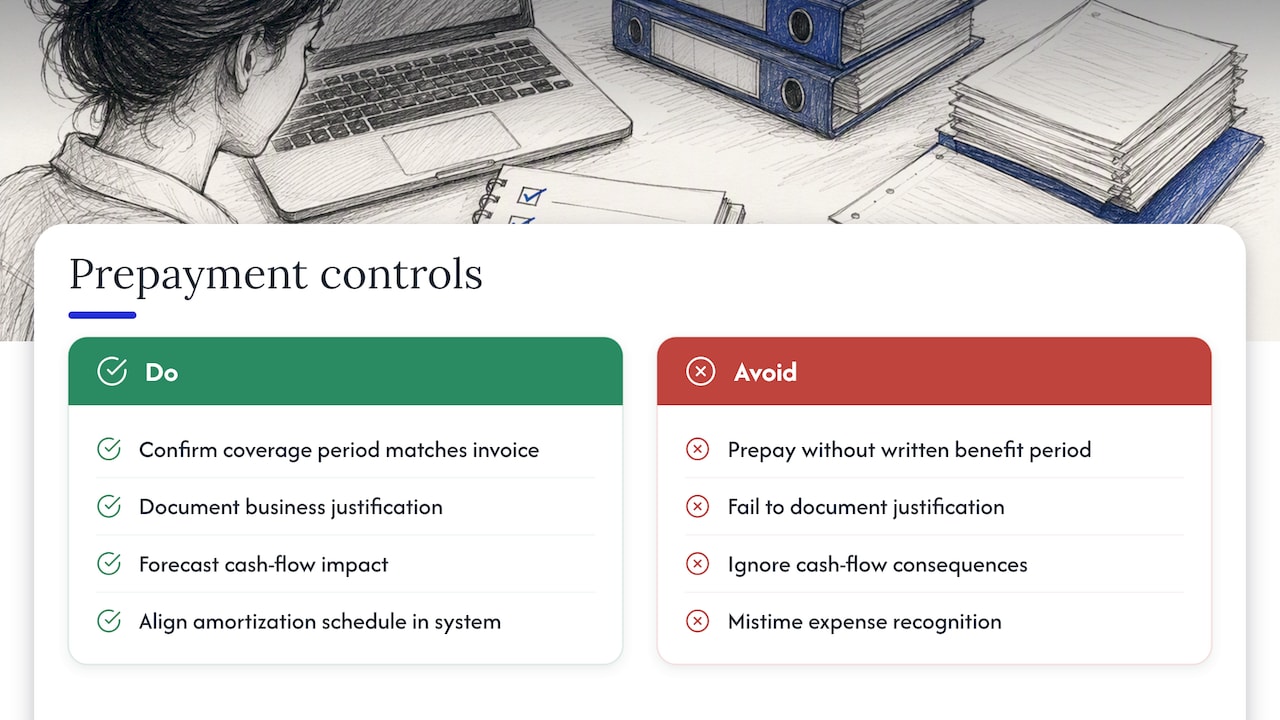
A quick checklist for finance teams evaluating a prepayment: confirm the coverage period matches the invoice, document the business justification for prepaying, forecast the cash-flow hit against upcoming obligations, and align the amortization schedule with the accounting system before the payment goes out.
Choosing between prepaid and collect for your situation
The right method depends on who holds negotiating leverage, how predictable your cash flow needs to be, and what your contract or Incoterms already require.
- Check what the contract already dictates: Incoterms like FOB, EXW, or CIF often settle the question before you even get a choice, so confirm those terms first.
- Weigh cash-flow flexibility against cost certainty: Prepaid locks in a rate now, collect keeps cash available longer but leaves you exposed to whatever the final invoice says.
- Ask the carrier or vendor about prepaid discounts: Many carriers price prepaid freight lower because it removes their collection risk, so it is worth asking directly rather than assuming collect is cheaper.
- Run a credit check before agreeing to collect terms: If you are the shipper offering collect terms to a buyer, confirm their payment history before the shipment leaves the dock.
- Watch for red flags on either side: A new trading partner with no payment history is a reason to avoid extending collect terms, and a vendor with unclear cancellation policies is a reason to avoid prepaying too far in advance.
Pro Tip: When a new customer requests collect terms, run a credit check before the first shipment rather than after a payment dispute forces the conversation.
Individuals managing a phone plan rarely need this level of analysis, prepaid almost always wins on simplicity. Businesses moving freight need the full checklist, because a single mismatched Incoterm can leave a shipment stuck at a border with nobody agreeing to release payment.
How FreightSuite handles prepaid and collect billing for forwarders
Reconciling prepaid and collect invoices manually is where forwarders lose margin, one missed charge, one mismatched currency, one delayed credit check at a time. FreightSuite was built as an alternative to legacy TMS platforms, with billing automation, invoice recognition, and credit control built natively into the system rather than bolted on as add-ons.

- Invoice recognition: Automatically matches prepaid and collect charges against the original quote, cutting the manual review time that reconciliation usually demands.
- Dynamic FX tracking: Keeps multi-currency freight invoices accurate in real time, which matters most when collect charges cross borders and currencies.
- Credit control: Flags consignee credit standing before a collect shipment goes out, reducing the risk of a refused delivery or a payment dispute at the dock.
- Finance dashboards: Gives forwarders a single view of outstanding prepaid and collect balances across ocean, air, and road freight.
FreightSuite’s solutions for finance teams walk through how this automation fits into daily billing operations, and the Road Freight Transport Management page details how these controls apply specifically to road freight invoicing. If reconciliation and credit exposure are eating into your margin, requesting a FreightSuite demo is the direct next step.
Sources
For a deeper look at prepaid expense accounting and the IRS 12-month rule, see Investopedia’s explainer. For freight-specific billing automation, FreightSuite’s blog on logistics payment automation covers what finance teams need to know before switching systems.
- Who Benefits from Prepaid Expenses?
FAQ
What is the difference between collect and prepaid?
Prepaid means the sender or account holder pays before the shipment moves or the service starts. Collect means the receiving party pays at the point of delivery or use, which shifts both the payment timing and the risk of nonpayment to that party.
Is third-party billing the same as collect?
No, third-party billing means a party other than the shipper or the consignee, often a broker or a separate business division, is billed for the charge. Collect billing specifically means the consignee pays upon delivery, so the two arrangements involve different paying parties even though people often mix them up.
Who pays for a collect shipment?
The consignee, meaning the party receiving the shipment, pays the carrier once the freight arrives. This arrangement increases the carrier’s exposure to nonpayment risk, which is why many carriers run credit checks on consignees before accepting collect terms.
What is PPA and PPD shipping?
PPD stands for prepaid, meaning the shipper pays the freight charges before or at pickup. PPA, prepaid and added, describes a variation where the shipper prepays the carrier and then adds that cost back into the invoice sent to the buyer.

