Top 4 Transport Management Alternatives 2026

Finding a transport management platform that automates freight workflows without demanding full legacy ERP replacement is complicated. Most platforms require custom integration work or hide pricing behind sales calls, which delays vendor selection and budget planning. Freight forwarders and logistics companies can use this comparison to match a transport management software to workflow needs and pricing expectations before engaging vendors.
Table of Contents
FreightSuite
At a Glance
Core Features
FreightSuite combines automatic document and email classificationautomatic invoice recognition and reconciliationKey Differentiator
The system was built by industry veterans to push automation into everyday freight forwarding tasks from day one. That focus shows up in features that automate document capture, matching, and routing to the right workflow. The design aims to convert those automation steps into measurable operational and financial improvements quickly.
Pros
FreightSuite claims measurable efficiency gains such as the reductions in data entry time and faster sales cycles that appear in the figure above. Its feature set covers rate management, air and ocean tracking, finances, and operations, which reduces tool sprawl for teams that handle multiple transport modes. Native AI agent orchestration and integrated accounting links make it easier to reconcile invoices and update ledgers without manual handoffs.
Cons
Notable Integrations
The product connects to mainstream accounting packages including Quickbooks, Xero, and Sage for financial reconciliation and invoicing automation. These connections let finance teams push entries into existing ledgers rather than rekeying data. Integration availability reduces effort when replacing or modernizing legacy billing processes.
Who It’s For
This product fits mid sized to large freight forwarding companies and logistics providers that need to replace legacy TMS systems. It suits teams with separate sales, operations, and finance functions that want to reduce manual work and speed quote response. Companies without in house IT resources should budget for implementation and training.
Unique Value Proposition
Agentic TMS functionality with AI agent orchestration built natively into the core product. That capability lets FreightSuite run recurring classification and reconciliation tasks automatically, rather than bolting on third party automation. For forwarders, the economic effect is fewer headcount hours spent on paperwork and faster quote conversion tied to the automated pricing engine.
Real World Use Case
A mid sized forwarder replaces spreadsheets and email threads with FreightSuite workflows. Quote response time drops from days to seconds because pricing and route options are computed automatically. Invoices are auto matched to shipments, which shortens the finance close and reduces disputes over billed services.
Pricing
Pricing is not publicly listed. The vendor appears to use tailored enterprise or business models that scale with seats and modules. Prospective customers should request a quote and a deployment plan that includes training and integration work.
FreightGain
At a Glance
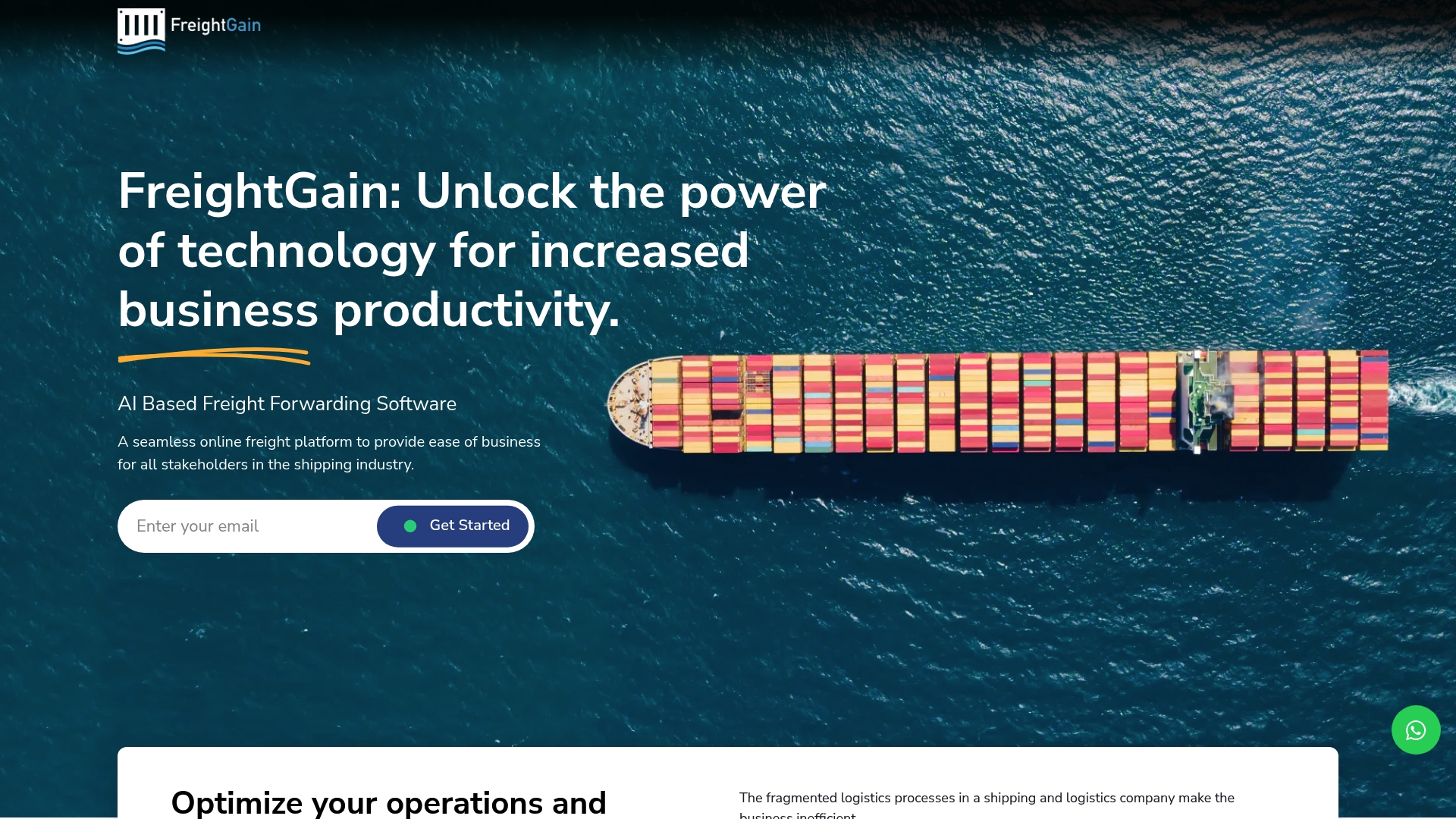
Integrates directly with SAP, Oracle, Tally, Odex, Hapag Lloyd, and Maersk. That level of native connectivity lets carriers and ERP teams exchange rates, bookings, and status updates without manual rekeying. FreightGain targets freight forwarders and shippers who need a single web interface for rate checks, bookings, B L processing, and export documentation.
Core Features
FreightGain automates the full shipping workflow from rate comparison through booking, cargo tracking, and bill of lading processing. The platform adds a CRM module for sales activity and supports trade documentation and compliance tasks to reduce paperwork. It also connects to major ERP systems so accounting and operational records flow into back office systems.
Key Differentiator
The defining feature is freight and ERP connectivity combined with end to end process automation. That pairing aims to reduce duplicate data entry across sales, operations, and finance teams and keep shipment records synchronized with enterprise systems.
Pros
FreightGain presents logistics functions together in one web application, which reduces the need for separate ERP or spreadsheet workarounds. It automates routine paperwork and booking steps to cut manual errors and free operations staff for exception handling. The platform reports real time updates and integrates with major ERPs, which helps teams keep finance and compliance records aligned during growth.
Cons
When It May Not Fit
Small freight forwarders that run highly localized processes or that cannot allocate an implementation team will likely struggle. Organizations that need transparent list pricing before vendor selection will find the lack of public figures a barrier. Firms requiring a light weight solution with minimal integration work will prefer a different approach.
Notable Integrations
FreightGain connects to a mix of ERPs and carriers.
Who It’s For
Shipping and logistics companies that plan to centralize sales, operations, and finance workflows will get the most from FreightGain. Freight forwarders with an IT team ready for integration work will realize the platform value faster. Customs agents and compliance teams that need digital documentation and reporting will also find the feature set relevant.
Real World Use Case
A global freight forwarder used FreightGain to consolidate rate comparison, booking, cargo tracking, and export documentation into a single web workflow. The company cut repetitive data entry between operations and finance and sped up responses to customer queries. That change freed operations staff to handle exceptions and improved the timeliness of billing records.
Pricing
Pricing is not available on the public site. The vendor lists pricing as likely custom or available on request, so budget conversations require direct contact and scope definition. That model means procurement teams must plan for an implementation estimate before finalizing total cost of ownership.
Website: https://freightgain.com
Logitude World
At a Glance
INTTRA integration for ocean freight tracking is built into Longitude World, giving forwarders direct access to vessel event data inside the platform. The product also advertises a cloud-based digital portal for customers, automated processes for high-volume tasks, and modular customization. That mix targets growing SMB forwarders that need visibility and configurability without rebuilding internal tools.
Core Features
Logitude World combines shipment management, quote generation, and invoices with a customer-facing digital portal that exposes tracking and billing. The platform adds container tracking and visibility through INTTRA, automated workflows to reduce manual steps, and security controls for operations and data. It supports cloud deployment and integrations so teams can connect carriers and back-office systems.
Key Differentiator
The central distinction is the combination of deep customization and embedded ocean-tracking via INTTRA. Many freight tools offer tracking or customization, but Logitude World ties the two so you can map carrier events into tailored processes. That approach helps teams use carrier signals to trigger billing, notifications, and exception workflows.
Pros
Logitude World reports high ratings on G2, Capterra, and SourceForge, which suggests broad user approval across review platforms. The product reduces manual handoffs by automating shipment processing and quoting, and the platform exposes real-time shipment state to customers through its portal. Customer onboarding and support score well in vendor materials, and the system’s configurability lets teams adapt workflows without heavy development.
Cons
When It May Not Fit
If your operation is a single-person forwarder handling a handful of shipments each month, the platform’s configurability may be more than you need. If you require transparent, line-item pricing before engaging vendors, this product’s private pricing model will slow procurement. Teams that must operate reliably without consistent internet access will find the real-time portal less useful.
Notable Integrations
The product lists INTTRA for ocean freight tracking as a native integration. That connection brings carrier event feeds into shipment records and supports event-driven automation.
Who It’s For
Forwarders and logistics managers at SMB freight forwarding companies that plan to grow and want a configurable operations platform will get the most from Logitude World. You should have basic process discipline and willingness to invest in configuration during onboarding. Teams that want ocean event data mapped into billing and notifications will find the product aligned to their needs.
Real World Use Case
A regional forwarder automated shipment processing and customer notifications after implementing Logitude World. The team used INTTRA feeds to trigger container status updates and to generate invoices faster. That change reduced manual tracking calls and improved customer visibility.
Pricing
Pricing is not specified publicly. The vendor indicates commercial terms are available after a demo or on request, so expect to contact sales for tiering and seat or module costs.
Website: https://logitudeworld.com
CargoEZ
At a Glance
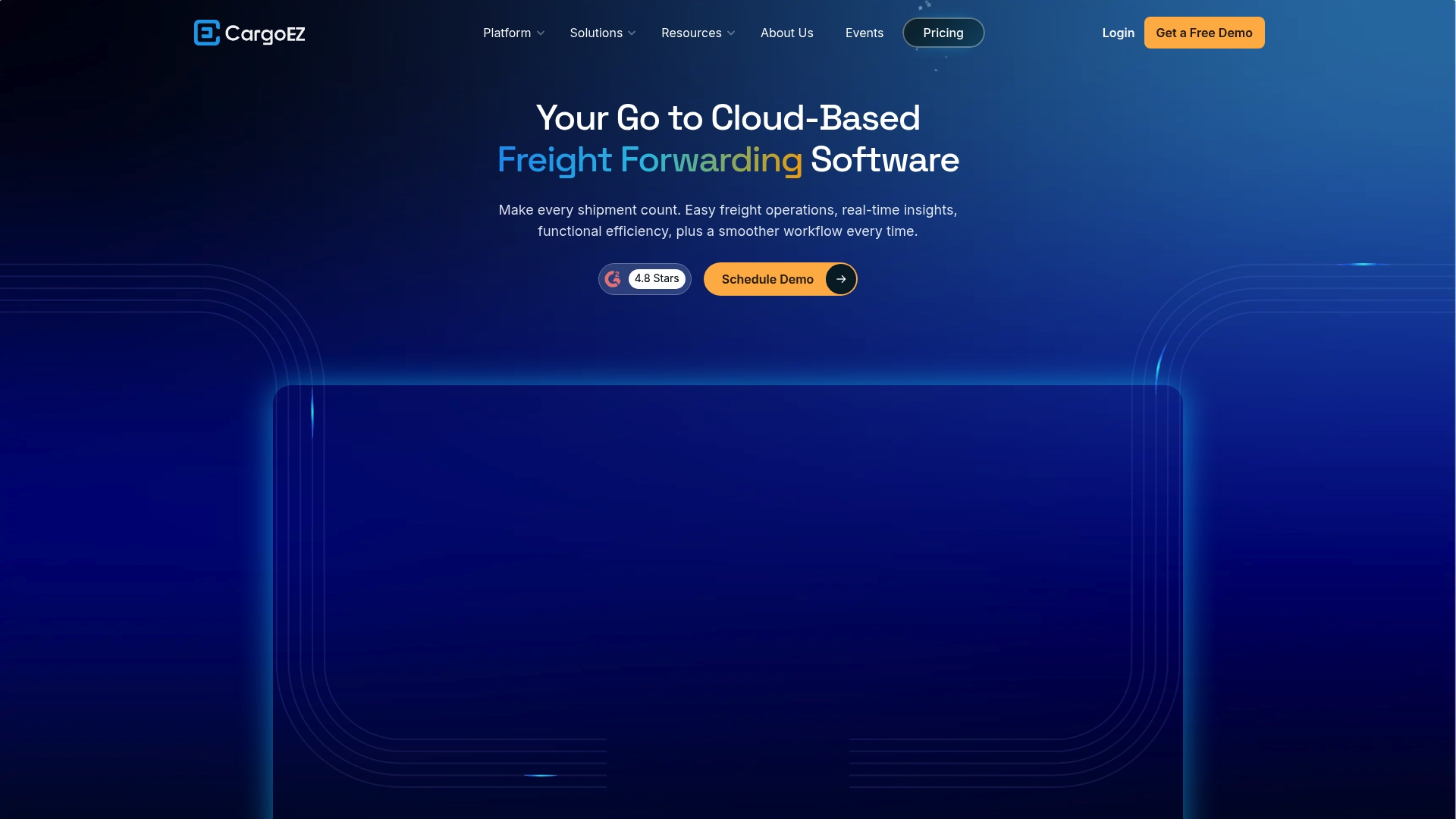
According to the company, CargoEZ holds SOC 2, ISO 27001, and GDPR compliance. The vendor also states CargoEZ is trusted by major freight forwarders worldwide. Those claims position the product as a security-minded, industry-oriented platform for freight operations.
Core Features
CargoEZ combines real-time cargo tracking and multi-modal shipment handling with compliance tools for filings such as AMS and ISF. It pairs a centralized CRM for contacts and deals with freight rate management that includes tariff comparison and optimization. The system also includes logistics accounting for multi-currency invoicing and profit reporting.
Key Differentiator
CargoEZ focuses exclusively on freight forwarders and packs operations, compliance, finance, and customer access into one cloud product. That focus translates into shipping-specific workflows and customs modules not commonly bundled together. Teams that need both operational visibility and filings support will see this platform as a single place to run those tasks.
Pros
The platform delivers a single environment for freight operations, customer management, finance, and customs, which reduces the number of separate tools teams must use. Its interface aims to cut manual entry and accelerate routine tasks, so staff spend less time on paperwork and more time managing exceptions. Flexible pricing options and the security certifications already mentioned support enterprise buyers who value control and data protection.
Cons
When It May Not Fit
CargoEZ requires a reliable internet connection and some onboarding time to reach peak productivity. Companies with highly customized or legacy workflows may need bespoke development to match their processes. If you need a plug-and-play system that maps exactly to a niche operation out of the box, this product may demand more configuration than you want.
Who It’s For
Freight forwarders and logistics companies that want to move operations into a single cloud system will benefit from CargoEZ. It fits teams that handle multi-modal shipments, do their own customs filings, and run financial reporting across currencies. Organizations that can allocate training time and accept tailored pricing will get the most value.
Real World Use Case
A global freight forwarder used CargoEZ to consolidate ocean, air, and road shipments into one dashboard. The team automated customs filings and gave clients a portal for real-time tracking. That setup reduced duplicate data entry and improved invoice accuracy while centralizing profit analysis.
Pricing
CargoEZ requires you to contact the vendor for a tailored quote. The vendor advertises flexible plans that adapt to shipment volumes and needs. Expect a sales-led pricing process rather than published fixed tiers.
Website: https://cargoez.com
Comparison of alternatives
Freight forwarding software presents a variety of strengths and tradeoffs based on individual organizational needs for automation, integration, and scalability. The following analysis delves into the distinctive advantages offered by FreightSuite, FreightGain, Logitude World, and CargoEZ, while addressing which solutions best align with specific professional scenarios.
Integration capabilities
FreightGain distinguishes itself with its ERP integration, enabling data synchronization across systems like SAP and Oracle. This feature is a significant benefit for organizations operating these enterprise systems as it reduces manual data entry and enhances data consistency. Conversely, Logitude World specializes in customization and uses integrations such as INTTRA to provide a unique tracking-focused operational platform. While FreightSuite excels in native AI automation, FreightGain’s connectivity offers extensive potential for system unification in enterprise-level environments.
Ease of use deployment
CargoEZ offers versatile compliance features such as multi-modal shipment handling and regulatory filings integrated within the platform. This emphasis makes it a dependable choice for enterprises prioritizing adherence to logistics regulations. FreightSuite, with its AI focus on automating paperwork flows, suits organizations seeking rapid implementation with minimal dependency on existing IT infrastructure. The tradeoff rests on whether tailored compliance tools yield a better fit for your operational priorities compared to AI-driven functionality.
Best fit
Our pick
FreightSuite stands out by its proprietary focus on automation across freight forwarding workflows, leveraging AI-driven technologies for data classification and reconciliation. This approach uniquely minimizes manual workload while enhancing operational efficiency. FreightSuite may not be ideal for smaller teams with distinct regulatory demands lacking IT support for setup. Overall, FreightSuite is an excellent choice for freight organizations ready to leverage cutting-edge automation for transformative efficiency improvements.
For organizations seeking advanced freight management platforms, the following table compares key features of leading software options:
Software
Primary Use Case
Key Differentiator
Best For
Pricing
Notable Limitation
FreightsuiteFreight automation & trackingNative AI agent orchestrationMid to large freight forwarding companiesPrice not publishedLimited public customer testimonialsFreightGainRate checks & dispatch managementIntegration with major ERPsMedium to enterprise-level forwardersPrice not publishedImplementation complexity for custom legacy systemsLogitude WorldShipment processing & ocean trackingCustomizable workflows with INTTRA supportGrowing SMB freight forwardersPrice not publishedDependent on internet access for real-time operationsCargoEZMultimodal shipment handlingCentralized system with compliance toolsFreight forwarders managing customs filingsPrice not publishedThird-party integrations not comprehensively listed
What Challenges Do Weezioo.com Alternatives Address in Freight Management?
Freight forwarding teams must cut through manual tasks and data entry delays to meet fast quote turnaround and reduce invoicing errors. FreightSuite answers these challenges by offering an Agentic TMS built to automate document handling, rate management, air and ocean tracking, and financial reconciliation. The system centralizes sales, operations, and finance workflows to cut headcount hours and improve operational margins.
For mid sized and large freight forwarders seeking reliable alternatives to Weezioo.com, FreightSuite’s native AI agent orchestration streamlines routine reconciliation and pricing. See how FreightSuite transforms legacy TMS workflows and lets your teams respond to customer quotes instantly. Visit FreightSuite to learn more and request a personalized demo that includes integration and training plans.
FAQ
How does Freightsuite automate document handling and quote generation?
Freightsuite combines automatic document and email classification with instant quoting. This feature significantly reduces manual data entry tasks associated with freight forwarding work. Users can expect improved workflow efficiency and faster response times for quotes.
What is the difference between FreightGain and Freightsuite?
FreightGain excels in its deep integration with major ERPs like SAP and Oracle, enabling smooth data exchange without manual rekeying. Freightsuite, on the other hand, offers native AI capabilities that streamline operational tasks specifically tailored for freight forwarding needs. This makes Freightsuite the better choice for companies focused solely on these functions.
Which transport management software allows for automated invoice reconciliation?
Freightsuite provides automatic invoice recognition and reconciliation features that help to minimize the effort required for financial closings. This capability assists finance teams in quickly aligning invoices with shipments, leading to fewer discrepancies.
Can I benefit from Freightsuite if my team lacks IT resources?
Freightsuite may require an implementation budget for training and integration, which is crucial if your team does not have in-house IT support. Planning for these resources will enhance the adoption and effectiveness of the software.
What unique functionality does Freightsuite offer for logistics teams?
The system features Agentic TMS functionality with AI agent orchestration, allowing for the automation of recurring tasks such as classification and reconciliation. This functionality leads to fewer hours spent on paperwork and accelerates the quote conversion process for logistics teams.

