Multi-Modal Logistics Tracking Setup: 2026 Guide
%20(5).png)
Multi-modal logistics tracking setup is the practice of monitoring shipments continuously across road, rail, sea, and air transport modes through a single integrated system. The industry term for this is multimodal supply chain visibility, and it covers everything from GPS and cellular positioning on trucks to satellite IoT on ocean vessels. The core challenge is not hardware. Software integration connecting carrier APIs, customs systems, and internal ERPs drives the primary value and the primary complexity of any cross-channel shipment monitoring project. Get that integration right, and you gain predictive ETAs, automated exception alerts, and a single dashboard your operations, finance, and customer service teams can all trust.
What do you need before setting up a multi-modal tracking system?
A successful setup starts with an honest inventory of what you already have and what you still need. Skipping this step produces expensive rework.
Hardware and positioning technology
Modern tracking devices use hybrid positioning, combining GPS, cellular triangulation, and satellite IoT depending on the transport mode and geographic coverage. The good news is that tracking devices automatically detect transport mode and adapt their behavior, eliminating manual device swaps at every handoff. That single capability removes a significant operational burden from warehouse and carrier teams.
Connectivity costs are real and must be budgeted before procurement. Global connectivity runs approximately £120–240 per device annually, covering cellular roaming for road and rail plus satellite IoT for ocean routes. That translates to roughly £10–20 per device per month. For a fleet of 500 active trackers, that is a six-figure annual line item before any software costs.
Software and integration requirements
Your platform must connect to carrier APIs, your ERP, and customs data feeds. The minimum viable software stack includes:
Pro Tip: Before signing any platform contract, ask the vendor to demonstrate a live ERP connector to your specific system. Generic API documentation is not the same as a tested, production-ready integration.
Contractual and organizational readiness
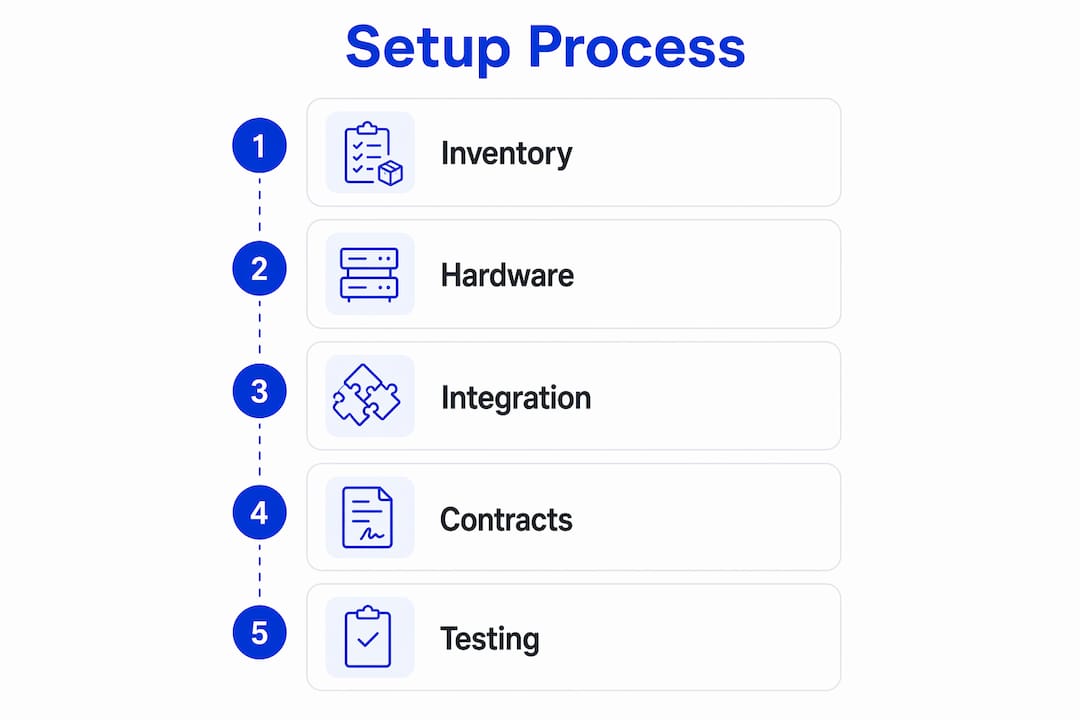
Carrier contracts must define reporting obligations at every mode handoff. Without milestone-backed SLAs mandating status updates at transfer points, you will have visibility blackouts regardless of how good your technology is. SLA clarity aligns carrier incentives with your operational needs.
Internally, change management is non-negotiable. Carriers need to scan trackers at pickup. Warehouse teams need updated receiving protocols. Customer service staff need training on reading the new dashboard. Technology without process adoption produces data, not results.
Readiness areaWhat to confirm before go-liveHardwareDevices procured, tested, and assigned to shipment typesConnectivityCellular and satellite plans active for all operating regionsSoftwareERP, carrier APIs, and customs feeds connected and testedContractsSLAs include milestone reporting at every mode handoffTrainingCarriers, warehouse, and customer service teams briefed
How to implement multi-modal tracking step by step
A phased approach reduces risk and lets you validate each layer before building on it.
Pro Tip: Run a parallel tracking period of two to four weeks where both your old process and the new system operate simultaneously. This surfaces integration gaps before you decommission legacy workflows.
What are the most common multi-modal tracking challenges?
Even well-planned implementations hit friction. Knowing where to expect it lets you prepare rather than react.
Data fragmentation is the most persistent problem. Carriers update their systems on different schedules, use different event vocabularies, and sometimes send duplicate or conflicting statuses. A canonical status model solves this at the data layer, but you still need rules for handling conflicts when two sources disagree on shipment location.
Connectivity blackouts occur on ocean routes, in remote rail corridors, and inside port facilities with poor cellular coverage. The practical fix is to log manual confirmations during connectivity gaps and update your TMS as soon as connectivity resumes. Manual milestone confirmations are not a failure of the system. They are a designed complement to automated tracking.
Mode transfer blind spots happen at the exact moments that matter most: when a container moves from a truck to a vessel, or from a vessel to a rail car. These handoffs are where cargo gets lost, delayed, or misdirected. Milestone-backed SLAs with carriers at every transfer point are the contractual defense against this. Technology alone cannot close this gap without contractual backing.
Cost versus ROI balance is a real concern, particularly for lower-volume operations. Companies shipping 500 or more multi-modal loads annually see the clearest ROI from centralized visibility platforms. Below that threshold, a lighter aggregator model may deliver better returns than a full direct-API build.
Carrier API changes are an ongoing maintenance burden. Carriers update their APIs, deprecate endpoints, and change authentication methods without always providing advance notice. Assign ownership of API maintenance to a specific team member or vendor, and build a monitoring alert that flags failed API calls within minutes.
Best practices for sustaining multi-modal tracking operations
Getting the system live is the beginning, not the end. Sustained performance requires deliberate operational habits.
Cross-team collaboration is the cultural backbone of sustained tracking performance. Operations, IT, finance, and commercial teams all depend on the same data. When one team changes a workflow without informing the others, data quality degrades. A monthly cross-functional review of tracking performance keeps everyone aligned and surfaces issues before they compound.
Key takeaways
A successful multi-modal logistics tracking setup requires software integration across carrier APIs, ERP, and customs systems as its foundation, supported by contractual SLAs and organization-wide process adoption.
The part most guides skip: software integration is where projects succeed or fail
I have worked with logistics teams that spent months selecting the perfect tracking hardware, only to go live with a system that could not talk to their ERP. The devices worked. The data arrived. And then it sat in a silo, disconnected from order management, disconnected from finance, and useless for customer communication.
Matthew Holland’s point resonates with me: modern tracking hardware is commoditized. The differentiation lives in the platform’s ERP connectors and exception management engine. When you evaluate platforms, the first question is not “how many carriers do you support?” It is “show me your ERP integration in production.”
The second thing I have learned is that contractual clarity is not a legal formality. It is an operational tool. A carrier that has no SLA obligation to report at a mode handoff will not report at a mode handoff. You cannot engineer your way around that with better software. The milestone-backed SLA framework is what converts a tracking system from a best-effort data feed into a reliable operational backbone.
The teams that get this right treat their tracking setup as a living system. They review integrations, update status models, and renegotiate SLAs as their network evolves. The teams that struggle treat it as a one-time IT project. The difference in outcomes is significant.
Freightsuite’s approach to integrated freight tracking
Freightsuite is built for logistics teams that need air, ocean, and road tracking connected to a single TMS without stitching together separate tools. The platform includes native ERP connectivity, carrier API integrations, and an exception management engine designed for complex cross-border operations.

For operations teams managing multi-modal freight, Freightsuite’s road freight capabilities and ocean freight module provide centralized visibility across modes with predictive ETA and automated workflows built in. The result is fewer manual interventions and faster exception resolution. If you are evaluating platforms for your next tracking implementation, book a demo to see how Freightsuite handles carrier API normalization and ERP integration in a live environment.
FAQ
What is multi-modal freight tracking?
Multi-modal freight tracking is the continuous monitoring of a shipment as it moves across two or more transport modes, such as road, rail, sea, or air, through a single integrated platform. It provides unified visibility from origin to destination regardless of how many carriers or handoffs are involved.
What is the biggest challenge in a multimodal tracking setup?
Software integration is the primary challenge. Connecting fragmented carrier APIs, customs systems, and internal ERPs into a coherent data feed requires more technical effort than hardware procurement and delivers the most operational value when done correctly.
How do you prevent visibility blackouts in multi-modal tracking?
Milestone-backed SLAs in carrier contracts mandate status reporting at every mode handoff, which closes the most common visibility gaps. Manual milestone confirmations logged during connectivity outages supplement automated tracking and keep your TMS current.
What is a canonical status model in logistics tracking?
A canonical status model translates non-standardized carrier event codes into a unified set of statuses, such as In Transit, Arrived at Facility, and Exception, so that data from multiple carriers can be compared and reported consistently across your operation.
At what shipment volume does centralized tracking deliver clear ROI?
Companies shipping 500 or more multi-modal loads per year see the clearest return from centralized visibility platforms, driven by reduced manual exception management and improved ETA accuracy across complex cross-border routes.

